

close
Choose Your Site
Global
Social Media


Views: 171 Author: Site Editor Publish Time: 2026-07-28 Origin: Site


Selecting the right greenhouse covering is a foundational capital expenditure. It dictates crop yield, heating loads, and long-term farm profitability. Modern agricultural operations demand precise climate control. You need optimal environments to maximize seasonal harvests. Your choice of glazing directly influences how well you manage indoor conditions. Traditional glass sets the gold standard for light transmission. However, modern twin-wall or multi-wall polycarbonate introduces competing benefits. These include superior insulation and high impact resistance. Navigating these distinct options requires balancing immediate structural demands against ongoing operational efficiency. This guide evaluates both materials through a rigorous farming lens. We focus on physical performance, climate resilience, and crop-specific outcomes. This analysis helps you finalize your facility's design. You will explore material lifespans, extreme weather tolerances, and structural prerequisites. Review these factors closely to make an informed, confident decision for your agricultural facility.
Light & Yield: Glass offers superior direct light transmission (up to 90%+), ideal for low-light climates, whereas polycarbonate excels in light diffusion, reducing plant sunburn.
Thermal Efficiency: Twin-wall polycarbonate provides a significantly higher R-value, drastically reducing winter heating costs compared to single-pane glass.
Durability & Risk: Polycarbonate is virtually shatterproof against hail, but degrades and yellows over 10–15 years. Glass can last 50+ years but carries an immediate shatter risk under extreme impact.
Infrastructure Costs: An Agricultural Glass Greenhouse requires a heavier, more expensive structural framework to support the weight of the panes.
Every commercial growing operation balances two primary operational metrics. You must maximize the photosynthetic active radiation (PAR) reaching your crops while minimizing the energy required to maintain ideal temperatures. The covering material you select directly dictates both outcomes. PAR drives photosynthesis. Higher light transmission typically accelerates plant growth cycles. Conversely, poor insulation allows valuable heat to escape during winter months. This forces heating, ventilation, and air conditioning (HVAC) systems to run constantly. You must weigh the value of maximum light against the operational burden of climate control.
Local weather extremes dictate your baseline structural requirements long before you consider light transmission. Heavy snow loads demand robust structural framing. Frequent hail storms threaten brittle surfaces. High winds test the structural integrity of lightweight panels. You must evaluate regional climate data thoroughly. Identifying your greatest environmental threat helps narrow down appropriate glazing materials immediately. Ignoring local weather patterns often leads to catastrophic structural failures during peak storm seasons.
Evaluating your initial capital expenditure against long-term maintenance cycles requires a generational perspective. Some materials offer lower upfront entry barriers but necessitate frequent replacement. Others demand heavy initial resource allocation but deliver decades of uninterrupted service. Farm profitability relies on predicting these replacement cycles accurately. A covering material surviving five decades fundamentally changes your facility's operational outlook compared to one requiring total replacement every decade.
An Agricultural Glass Greenhouse represents a permanent structural asset. The core strength of horticultural glass lies in its absolute permanence. It maintains peak light transmission indefinitely. Glass does not fade, yellow, or cloud over time. It delivers maximum PAR to your crop canopy year after year. Furthermore, glass offers exceptional aesthetic permanence and structural rigidity. It stands as an inert material. It resists chemical degradation entirely. Aggressive farming treatments, harsh sanitizers, and potent fertilizers will not etch or damage the surface.
Despite these strengths, glass carries notable performance limitations. Standard single-pane glass exhibits high thermal conductivity. It offers poor insulation. Double-glazing improves thermal efficiency but drastically increases material weight. Consequently, glass demands heavy-duty aluminum or steel framing. The sheer weight of the panes requires massive structural supports. These thick supports can cast unwanted shadows across your crops. Furthermore, heavy framing elevates initial construction complexity.
Certain agricultural scenarios heavily favor glass installations. We recommend glass for operations cultivating high-value crops demanding maximum natural sunlight. Seedlings and specific fruiting crops thrive under intense direct light. Operations located in stable climates experience minimal hail risk, making glass highly reliable. If you intend to build a legacy structure prioritizing a 40-year lifespan, glass remains the superior option. It suits established farms prioritizing long-term permanence over immediate thermal efficiency.
Modern polycarbonate structures deliver exceptional environmental control. Twin-wall and multi-wall designs trap air between polycarbonate layers. This trapped air acts as a powerful insulating barrier. The resulting thermal efficiency lowers winter heating demands significantly. Additionally, polycarbonate inherently diffuses sunlight. Light diffusion scatters incoming rays, allowing photons to penetrate lower plant canopies. This scattered light prevents hot spots and reduces the risk of leaf burn. The material is remarkably lightweight and shatter-resistant. Installers handle these panels safely and quickly.
However, polycarbonate exhibits specific performance limitations over time. The primary drawback involves ultraviolet (UV) degradation. The plastic matrix yellows gradually. Over a 10 to 15-year period, light transmission can drop by up to 20%. This reduction slowly diminishes crop yields as the panels age. Furthermore, the internal flutes can trap condensation. Moisture inside these channels creates an ideal breeding ground for algae. Algae growth further obscures light transmission. You must seal and vent these panels flawlessly to prevent internal contamination.
Polycarbonate excels in specific challenging environments. We recommend this material for regions enduring harsh, prolonged winters. The insulating properties preserve immense amounts of energy. Operations located in recognized hail belts also benefit greatly. The shatterproof nature of the material prevents catastrophic crop loss during severe storms. If minimizing winter heating burdens outweighs the need for maximum absolute light transmission, polycarbonate serves as the most pragmatic choice for your farm.
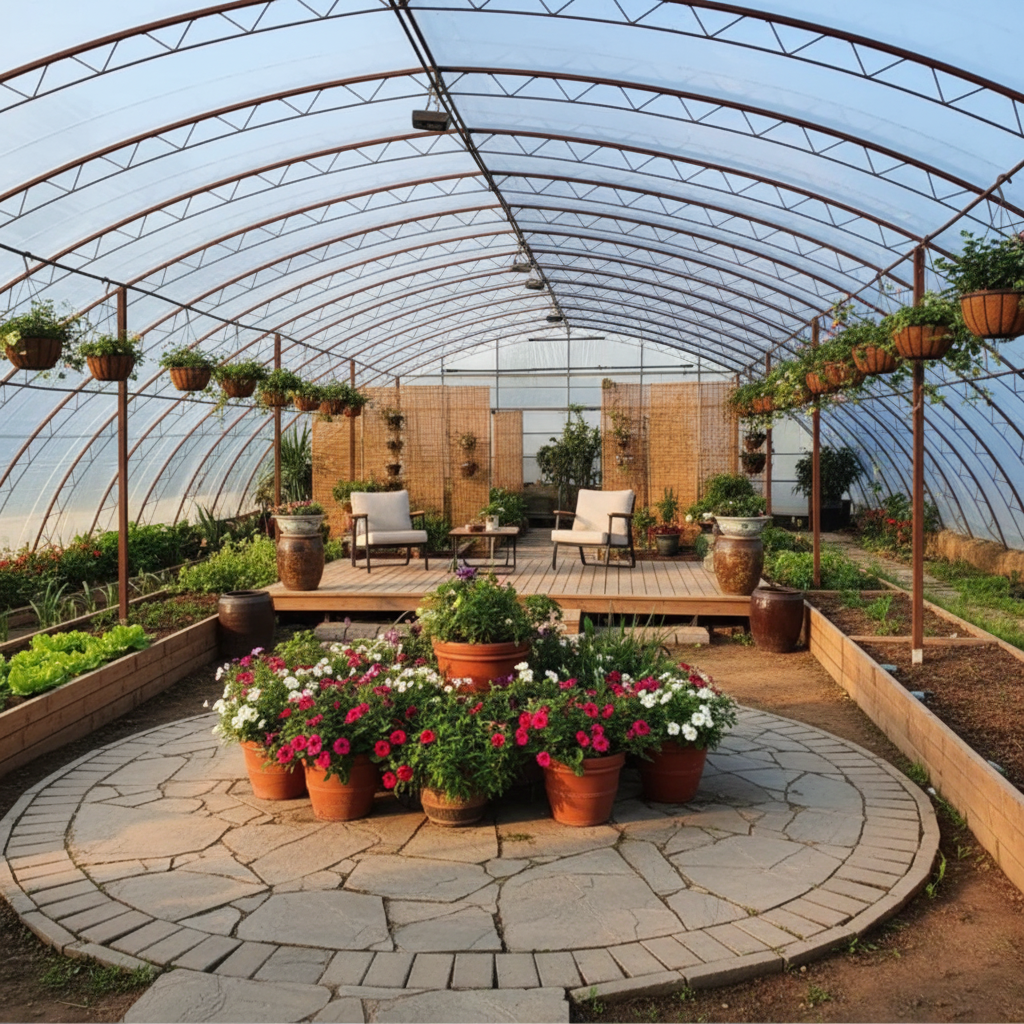
Horticultural glass delivers 90% to 93% direct light transmission. Direct light hits the upper canopy forcefully. It fosters rapid, aggressive growth in mature plants. However, direct light casts distinct shadows. Lower leaves often remain shaded. Additionally, the bulky structural supports required for heavy panes create distinct shadow bands across the greenhouse floor.
Polycarbonate offers 80% to 85% diffused light transmission. While the absolute volume of light is lower, the quality differs entirely. Diffused light scatters upon entering the structure. It wraps around upper leaves and penetrates deep into the lower canopy. This even distribution minimizes plant stress. It eliminates harsh hot spots and prevents sunburn on delicate foliage. Many growers find diffused light produces more consistent, uniform crop yields.
Thermal resistance, measured as R-value, dictates how quickly heat escapes your facility. Higher R-values indicate superior insulation. The difference between these two materials directly impacts your monthly energy consumption.
Material Specification Comparison | ||||
Material Type | Direct Light % | Diffused Light % | Approximate R-Value | Expected Lifespan |
|---|---|---|---|---|
3mm Single-Pane Glass | 90 - 93% | Minimal | 0.9 | 50+ Years |
8mm Twin-Wall Polycarbonate | Minimal | 80 - 85% | 1.6 | 10 - 15 Years |
16mm Multi-Wall Polycarbonate | Minimal | 70 - 75% | 2.5 | 10 - 15 Years |
Transitioning from a 0.9 R-value to a 1.6 R-value substantially reduces thermal transfer. In cold climates, this insulation upgrade slashes heating requirements drastically. You burn less fuel to maintain optimal nighttime temperatures. Over a harsh winter, these energy savings accumulate rapidly. Conversely, poor insulation requires massive heating units running constantly to combat nighttime temperature drops.
Extreme weather events test the absolute limits of your facility. You must prepare for local climate realities.
Extreme Weather Resilience Chart | ||
Weather Event | Glass Performance | Polycarbonate Performance |
|---|---|---|
Hail Impacts | Standard panes shatter instantly. Tempered upgrades are necessary but expensive. | Highly resilient. Panels absorb impact and bounce hail away without shattering. |
High Winds | Excellent. Heavy frames and rigid panes resist wind uplift easily. | Vulnerable if improperly secured. Lightweight panels can blow out under negative pressure. |
Heavy Snow Loads | Excellent. Rigid frames bear immense weight. Heat loss helps melt snow quickly. | Good. However, high insulation prevents internal heat from melting roof snow easily. |
A well-engineered Farming Glass Greenhouse handles high winds exceptionally well. The inherent weight of the structure anchors it firmly. Heavy, rigid frames resist twisting or bowing. Polycarbonate structures require meticulous fastening. Poorly secured panels act like sails during intense windstorms. However, polycarbonate decisively wins against hail. It absorbs kinetic energy safely. Glass requires expensive tempering processes to survive even moderate hail strikes.
Site preparation dictates the long-term success of your installation. Glass structures mandate precise, unyielding foundations. You must pour perfectly level concrete footings. Any subsequent soil settling causes rigid frames to shift. When a rigid frame shifts, the inflexible glass panes crack under the resulting pressure. You cannot compromise on foundation engineering when selecting glass. Polycarbonate systems offer greater leniency. The material flexes slightly. It absorbs minor structural shifts without failing. This flexibility makes polycarbonate suitable for varied terrains and less rigid foundations.
Installation complexities differ vastly between the materials. Polycarbonate demands meticulous attention to detail during assembly. You must seal the open flutes carefully. Installers use solid aluminum tape along the top edge to block moisture entry. They apply specialized breather tape along the bottom edge. This venting tape allows condensation to drain while keeping insects out. Skipping this crucial step guarantees algae blooms inside the panels. Once algae takes root inside the flutes, you cannot remove it. Glass installation focuses primarily on safe handling and securing the heavy panes into their gaskets.
Long-term maintenance realities influence your operational workflows. Replacing a single broken glass pane is straightforward. You remove the old glazing bars, extract the shards safely, and insert a new pane. However, broken glass presents a severe safety hazard to workers and crops below. You must halt operations to clean the area meticulously. Polycarbonate requires a different mindset. You must plan for total panel replacement every decade. As the plastic yellows and light transmission drops, you eventually reach a tipping point. Yield losses will justify the labor intensive process of stripping the entire roof and installing fresh panels.
Every agricultural operation features unique environmental constraints and operational goals. Use the following framework to align material strengths with your specific farming reality.
Choose a Glass Greenhouse if:
Your region experiences very low natural winter sunlight, requiring every available percentage of PAR for your crops.
You cultivate high-margin crops where minor yield increases offset heavier initial infrastructure investments.
You are building a multi-generational legacy structure intended to operate for 30 to 50 years.
You have the required budget to engineer and pour an unyielding, heavy-duty concrete foundation.
Hail and extreme impact events remain statistically rare in your specific geographic zone.
Choose a Polycarbonate Greenhouse if:
Winter heating demands represent your primary operational bottleneck and largest energy expense.
You operate in an area prone to severe hail storms or surrounded by tall trees dropping heavy branches.
You intend to utilize a lighter-weight structural frame to reduce your initial construction capital.
Your crops suffer easily from leaf burn and benefit significantly from scattered, diffused light penetration.
You possess the labor capacity to undertake a total roof replacement cycle every 10 to 15 years.
Selecting the ideal covering requires balancing immediate environmental threats against long-term operational efficiency. Neither material reigns universally superior for every agricultural application. The decision remains a calculated trade-off. You must weigh the permanent clarity of traditional glass against the forgiving, insulated nature of modern polycarbonate.
Assess your local climate threats realistically, prioritizing hail frequency and winter temperature drops.
Evaluate your crop's specific light requirements, deciding between maximum direct PAR and gentle diffused light.
Analyze your foundation capabilities, ensuring you can support the immense weight of a rigid structure if required.
Calculate a 10-year operational projection comparing projected heating savings against anticipated material replacement cycles.
We strongly recommend auditing your local climate data meticulously before breaking ground. Map out your average winter heating degree days alongside historical storm data. Use this data to model your heating requirements. Compare the ongoing energy savings provided by insulation against the eventual labor required for panel replacement. Let localized data drive your final structural design.
A: Yes, standard glass typically gets hotter during peak summer months. It allows immense direct solar gain. Direct sunlight heats internal surfaces rapidly. Polycarbonate diffuses incoming light and provides better insulation. This insulation slows heat transfer, buffering the internal environment against rapid temperature spikes during intense afternoon sun.
A: Tempered glass resists moderate hail but shatters completely into small cubes if the impact exceeds its threshold. Replacing tempered glass is expensive. Polycarbonate absorbs kinetic energy effectively. It rarely shatters, even under severe hail. While massive hailstones might dent polycarbonate, the panels generally remain intact and functional.
A: Absolutely. Many growers utilize hybrid models successfully. They install glass on the roof to maximize direct light transmission for the upper canopy. They then install twin-wall polycarbonate on the side walls. This hybrid approach improves overall thermal insulation near the ground while maintaining excellent overhead sunlight.
A: You must seal the panel flutes correctly during installation. Apply solid aluminum tape completely across the top edge to prevent water entry. Apply specialized anti-dust breather tape across the bottom edge. This allows internal condensation to drain out while blocking spores, dust, and insects from entering the channels.


