

close
Choose Your Site
Global
Social Media


Views: 163 Author: Site Editor Publish Time: 2026-09-10 Origin: Site


Commercial agricultural facilities are rapidly transitioning from static mechanical shading to dynamic climate control. Outdated methods like retractable screens and whitewash simply cannot keep pace with modern yield demands. Facility managers face a constant, high-stakes challenge. They must balance optimal light transmission with active thermal management to protect operating margins. Unpredictable weather patterns make this balancing act increasingly difficult year after year.
You need responsive tools adapting instantly to changing environmental conditions. While smart glass films offer precise environmental control, they demand rigorous analysis before deployment. This guide explores how to evaluate and implement dynamic shading technologies effectively. We establish an evidence-based framework for facility upgrades. You will learn how to navigate material selection, mitigate physical implementation risks, and manage essential integration requirements. Modern agriculture requires proactive strategies to maximize both energy efficiency and crop yields simultaneously.
Dual-Impact ROI: Financial returns hinge simultaneously on reduced HVAC (cooling/heating) loads and optimized crop yields via precise light modulation.
Material Selection Matters: Not all films suit agricultural environments; evaluating PDLC, Electrochromic (EC), and multilayer films requires prioritizing PAR (Photosynthetically Active Radiation) transmission.
Implementation Risks: Success in high-humidity agricultural settings depends entirely on proper edge sealing, moisture barriers, and low-voltage system integration.
Automation Dependency: Maximum efficiency is only realized when film controllers are integrated with centralized greenhouse management systems.
Commercial growers know static shading fails during erratic weather. Traditional solutions create a binary environment. It is either completely bright or heavily shaded. This "all-or-nothing" approach often causes localized overheating when shading is retracted too late. Alternatively, it starves plants of essential photons when variable cloud cover rolls in. Mechanical screens also cast harsh physical shadows. They break down mechanically and collect light-blocking dust.
You must look toward dynamic solutions. Active shading adapts to real-time conditions seamlessly. This adaptation ensures optimal growth environments across the entire crop lifecycle. We measure success through highly specific, quantifiable metrics rather than subjective observations.
Measurable reduction in Solar Heat Gain Coefficient (SHGC): You need lower solar heat gain during peak summer months. Blocking infrared radiation before it enters the structure prevents massive temperature spikes.
Decreased reliance on evaporative cooling: Active HVAC and evaporative cooling systems consume massive energy. Reducing their runtime directly improves your operational profitability.
Stabilized Daily Light Integral (DLI) targets: Sensitive crops like leafy greens require consistent, predictable light. Unstable DLI disrupts growth cycles and delays harvesting schedules.
Best Practice: Monitor baseline DLI and internal temperatures for an entire season before retrofitting. You need accurate benchmark data to measure true performance improvements.
Common Mistake: Relying solely on internal temperature drops. You must continually correlate temperature changes against actual crop yield variations.
Selecting the correct material chemistry dictates your operational success. Not all materials work well inside a humid, chemically active environment. We must evaluate three main commercial categories to determine the right fit for your facility.
PDLC technology utilizes microscopic liquid crystals suspended in a polymer matrix. You apply a small voltage, and the crystals align, turning the film clear. You remove power, and they randomize, turning the film opaque and highly diffuse.
Pros: Instantaneous transition gives you immediate environmental control. Fast-moving clouds pose no issue. It provides excellent light diffusion, scattering light deeper into your crop canopy.
Cons: It requires continuous voltage to remain clear. It primarily switches between opaque/diffused and clear states, offering limited dimming capability.
EC films use ion transfer across nano-layers to change opacity. You can dial in the exact tint level you need based on incoming solar radiation.
Pros: It requires minimal power. You only use electricity during the transition phase. Variable tinting allows precise spectrum and heat control throughout the day.
Cons: Transition times are much slower. It can take several minutes to clear fully. It may reduce overall PAR transmission slightly, even in its most clear state.
These films utilize advanced nano-coatings to reject heat. They do not change state dynamically but offer excellent baseline protection.
Pros: They require zero electrical infrastructure. They are highly durable. They block specific infrared wavelengths while allowing visible light through easily.
Cons: You lack dynamic, automated response to real-time weather changes. The shading remains static all year regardless of winter low-light conditions.
Technology Type | Power Requirement | Transition Speed | Primary Agricultural Benefit |
|---|---|---|---|
PDLC Film | Continuous (in clear state) | Instantaneous (< 1 second) | Exceptional light diffusion; fast response |
Electrochromic (EC) | Only during transition | Slow (3-10 minutes) | Precise, variable tinting levels |
Passive Multilayer | None | N/A (Static) | High durability; zero failure points |
Evaluating material performance against plant physiology requires scientific rigor. You cannot simply block light indiscriminately. You must block the right kind of light while preserving essential growth spectrums.
The biggest industry skepticism surrounds Photosynthetically Active Radiation (PAR). You must ensure the clear state does not aggressively inhibit essential photosynthetic wavelengths. Plants require photons within the 400-700 nm spectrum. Aggressive tinting can starve your crop quickly. Always demand detailed spectral graphs from potential vendors. You need third-party verification of high PAR transmission before proceeding.
Total light reduction often sounds alarming to growers. However, scattered light compensates heavily for minor total light drops. High haze factors scatter photons evenly across the facility. This diffusion prevents upper-canopy leaf burn during peak solar noon. It also promotes uniform growth deeper in the plant structure. Scattered light hits significantly more leaf surface area, optimizing overall photosynthesis.
You need hard data proving thermal insulation capabilities. Look for vendor-supplied, third-party tests on U-value improvements. U-value measures heat transfer through the glazing. Lower values indicate much better insulation. Assess the specific infrared blocking capabilities carefully. Blocked IR radiation means less internal heat generation. This directly lowers your cooling requirements.
Best Practice: Request independent agricultural lab reports. Do not rely on internal architectural marketing numbers. Plants respond differently than human office workers.
Common Mistake: Ignoring the haze factor. Direct, intense sunlight often causes severe micro-climatic stress at the top of the canopy.
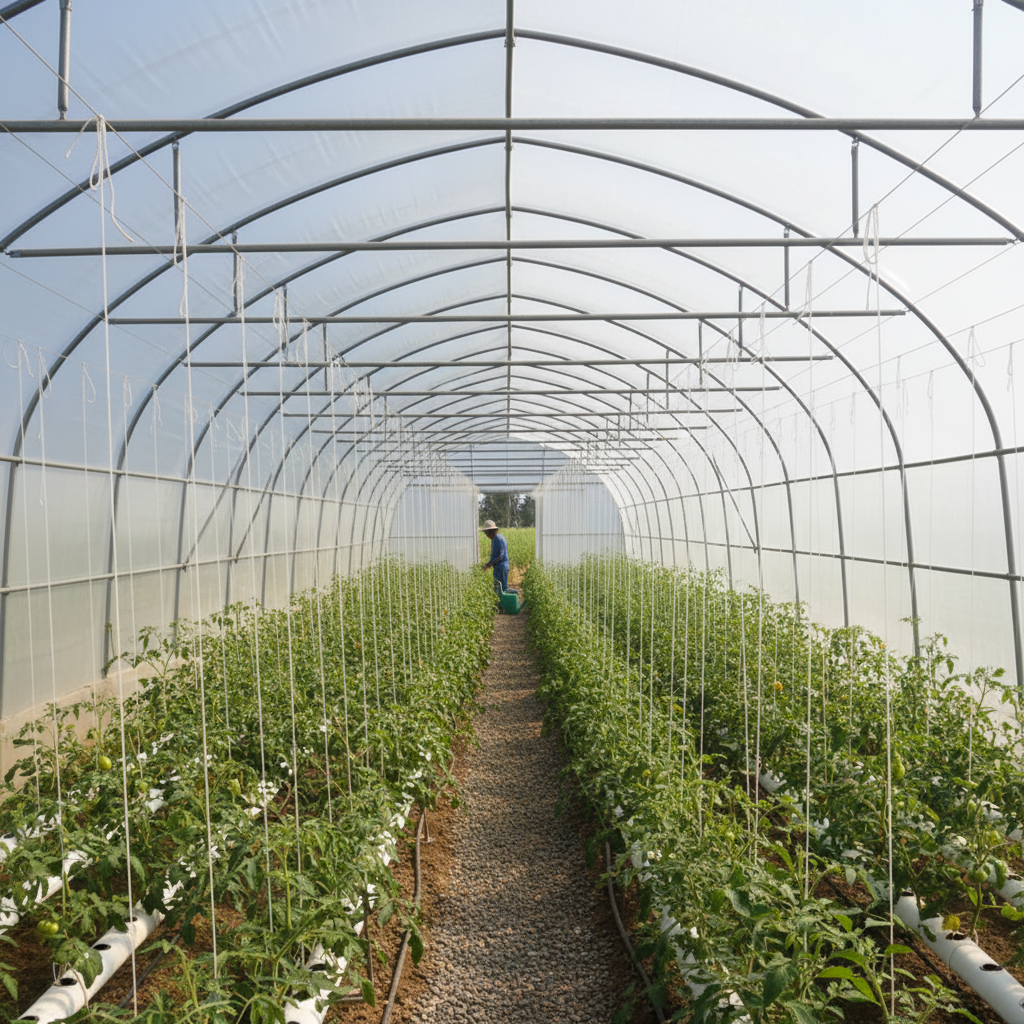
Bringing dynamic technology into a Smart Glass greenhouse presents complex physical challenges. The agricultural environment is incredibly harsh on electronics.
You must assess material adhesion thoroughly. Films behave differently on glass versus polycarbonate panels. Plastics expand and contract significantly under thermal load. This constant thermal movement causes physical stress. Adhesives must accommodate this shifting without tearing. Applying film to older polycarbonate can cause outgassing. Vapors escape the plastic, forming destructive bubbles underneath the material layer.
Moisture ruins electronics rapidly. Delamination remains the highest failure risk in agricultural settings. Constant high humidity attacks the exposed film edges over time. You must demand specialized waterproof edge sealing protocols. Insist on marine-grade busbar encapsulation. If condensation reaches the active liquid crystals, the entire panel dies permanently.
Your hardware must communicate directly with your existing climate controller. Connecting driver modules to standard systems like Priva or Hoogendoorn is mandatory. Engineering requirements typically dictate 0-10V, DALI, or local API protocols. Standalone remote controls waste immense potential. You need centralized, automated responses driven by external weather stations and internal temperature sensors.
Retrofitting existing builds requires careful electrical planning. You must route extensive low-voltage wiring across expansive structural trusses. Voltage drop becomes a serious issue over long greenhouse runs. We recommend consulting agricultural electricians early in the design phase. Calculate wire gauges carefully to ensure consistent voltage reaches the furthest panels.
Best Practice: Conduct a full structural audit before ordering materials. Ensure your aging trusses can support the extra conduit weight safely.
Common Mistake: Using standard silicone sealants on edges. Standard sealants break down under constant UV and humidity exposure.
Selecting the right commercial partner minimizes long-term operational risks. You need a structured, unforgiving decision framework before signing contracts.
Never accept a standard architectural warranty. Commercial office buildings do not experience 90% constant humidity. They do not utilize aggressive chemical fumigation or sulfur burners. You must demand guarantees explicitly covering harsh agricultural conditions. High UV exposure in a glasshouse degrades standard polymers quickly. Read the fine print carefully to ensure environmental exemptions do not exist.
Do not retrofit the entire facility blindly. Structure a localized, rigorous proof-of-concept. Treat a single isolated bay or exactly 100 square meters first. Measure actual microclimate changes continuously. Compare crop yields, watering needs, and plant health against an untreated control bay nearby. This localized empirical data justifies the massive capital expenditure of a wider rollout.
Establish crystal clear Service Level Agreements. Driver failures happen. Localized film delamination occurs occasionally. You need guaranteed, rapid response times. Determine exactly who pays for the physical labor during warranty replacements. Material-only warranties leave you paying hefty installation bills for defective products.
Dynamic materials represent a fundamental shift in facility operations. They successfully transition greenhouse management from reactive shading to proactive climate optimization. You can actively dictate your growing environment rather than simply suffering through extreme weather spikes. This unprecedented control protects delicate crops and stabilizes revenue streams.
Successful adoption requires strict strategic alignment. You must match the specific film chemistry to your facility’s primary operational bottleneck. PDLC solves complex light distribution and diffusion issues beautifully. EC films conquer intense, prolonged heat gain efficiently. Choose the specific tool solving your biggest, most expensive problem.
Take decisive action today. Initiate a micro-climate energy audit for your worst-performing growing zone. Request localized pilot installations from your most promising shortlisted vendors. Gather empirical performance data immediately. You can start optimizing your crop yields and drastically reducing energy usage this season.
A: They actively block damaging UV and IR rays causing excessive internal heat. However, premium agricultural films maintain exceptionally high PAR transmission. You should strictly demand a baseline transmission rate exceeding 80% PAR in the clear state. This ensures plants receive adequate photosynthetic energy while staying highly protected from dangerous thermal stress.
A: Realistic electrical consumption runs between 3 to 5 watts per square meter. The film only consumes power when actively maintained in its transparent state. You must contrast this minor, predictable electrical draw against the massive energy savings generated by significantly offset HVAC and evaporative cooling loads.
A: Yes, but it requires careful surface preparation. Polycarbonate expands and contracts much more than standard glass. It can also experience chemical outgassing, creating destructive bubbles. You need specific dry-installation adhesives designed for active plastics. Ensure the vendor thoroughly verifies chemical compatibility with your exact panel material before application.
A: You can expect a realistic operational lifespan of 7 to 10 years. However, this longevity depends entirely on original installation quality. The highest failure risk remains moisture ingress. Strict adherence to marine-grade edge-sealing techniques guarantees the film survives extreme internal humidity, condensation, and standard chemical fumigation.


